Leave No Trace in the Himalaya: What Responsible Camping Looks Like
The seven Leave No Trace principles, adapted to thin air, cold streams and mountain villages. What good camping looks like on a real Himalayan trail.
· 5 min read
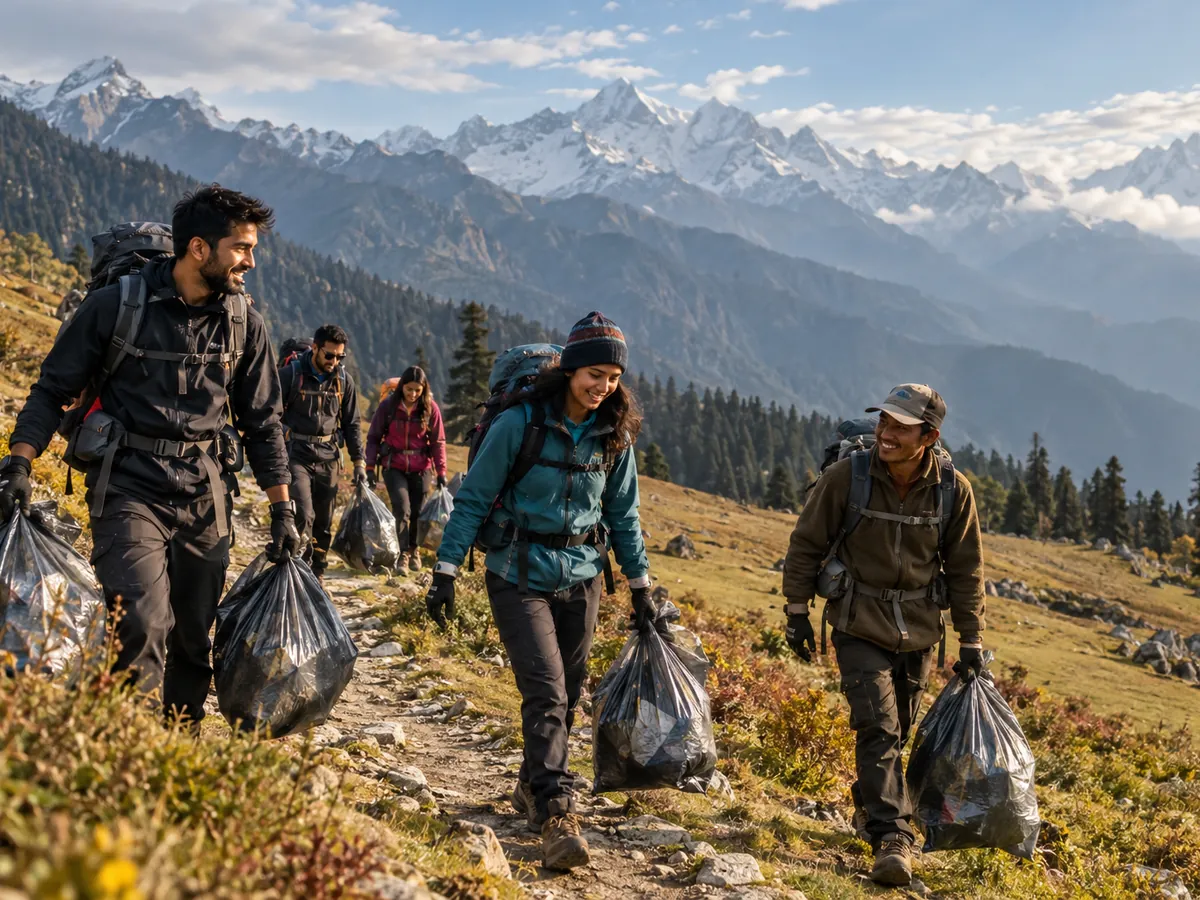
A Himalayan meadow looks tough. It is not. At 3,500 m, the growing season is short, the soil is thin, and a patch of grass trampled in October may still be bare next summer. Snow melts into the same streams that villages below drink from. Everything we do up there travels downhill.
Leave No Trace is a simple set of seven principles used by outdoor groups across the world. Here is what each one means when your campsite is a ridge in Uttarakhand or a valley in Himachal.
1. Plan ahead and prepare
Good Leave No Trace starts at home. Repack snacks into reusable boxes so wrappers stay in the city. Bring a reusable bottle, a mug, and a small cloth bag for your own rubbish. Check the season, since trekking a fragile meadow in the wet shoulder weeks causes more damage than the same trek in dry weather.
Group size matters too. Small groups are easier on trails, quieter around wildlife and lighter on camps. It is one of the reasons we keep our departures small.
2. Travel and camp on durable surfaces
- Stay on the trail. Cutting a switchback to save thirty seconds starts a new gully that rain will deepen for years.
- Walk single file through meadows and walk through puddles instead of around them. Going around widens the trail.
- Camp on established sites. Do not clear stones, flatten shrubs or dig trenches around the tent.
- Keep camps well away from streams and lake edges, so water and shoreline plants stay clean.
3. Dispose of waste properly
The golden rule is simple: whatever comes up goes back down. Food wrappers, tissues, sanitary products, tea bags, orange peel and cigarette butts all go into the waste bag. Orange peel does not vanish in the cold. It sits there for months and attracts animals.
A good camp has no rubbish pit and no burn pile. Burning plastic releases toxic smoke and leaves melted bits in the soil. On our treks the rule is to carry all waste down, and every trekker is part of that, with their own wrappers going into their own daypack.
For human waste, teams use dry toilet tents or a properly dug cat-hole set well away from water, with toilet paper packed out. If you want to know how that works in sub-zero conditions, we wrote a whole article on it.
No plastic, please
Single-use plastic is the biggest problem on popular trails. Carry a refillable bottle and ask your leader where safe water is available. Skip plastic sachets of shampoo or wet wipes. If you must bring wipes, choose a small pack and carry every used one back out.
4. Leave what you find
- Do not pick flowers, even a single blossom. Alpine plants take years to bloom, and each flower is the next generation of seeds.
- Do not take stones, antlers, feathers or old prayer scarves as souvenirs.
- Do not carve names into trees or rocks. Photograph things instead.
- Do not build stone cairns beyond the ones already there. Extra piles confuse the trail and move the homes of small creatures.
5. Minimise campfire impacts
A campfire is romantic, and it is also one of the heaviest footprints in the mountains. In many Himalayan forests and protected areas, open fires are banned, and rightly so. Firewood cut at altitude takes decades to regrow, and it is the same wood that villagers need to survive the winter.
That is why responsible operators cook on stoves and keep warm with layers, hot drinks and good company. If a fire is permitted and truly needed, it should be small, in an existing ring, using only fallen wood, and completely cold before you leave. Never pull branches off living trees.
6. Respect wildlife
Himalayan monal pheasants, blue sheep, langur monkeys and the occasional bear all live along these trails. Keep your distance, watch quietly, and never feed anything. A biscuit tossed to a monkey teaches it to rob the next trekker, and a bear that finds food in camp is often a bear that has to be moved or put down.
Store food in sealed bags, not in your tent, and keep voices low at dawn and dusk when animals are most active. Use your camera zoom, not your feet.
7. Be considerate of other visitors, and of the people who live here
The Himalaya is not an empty wilderness. It is home. Shepherds move their flocks through the same meadows, and villages like Sankri or Lohajung host trekkers year after year. A few habits go a long way:
- Greet people. A simple namaste costs nothing and means a lot.
- Ask before photographing people, homes or festivals.
- Dress modestly when entering villages and temples.
- Treat sacred sites with care. Remove shoes where asked, do not touch offerings, and keep to marked paths around shrines and lakes.
- Buy local where you can: tea at a village stall, a woollen cap from a local knitter.
- Keep music for headphones. Mountain quiet belongs to everyone.
Small habits that add up
None of this needs a lecture. By day three, most groups are naturally tidy. Someone picks up a stray wrapper that is not theirs. Someone else reminds the group to refill bottles at the stream point. The trail starts to feel like something you are looking after, not just walking through.
A good test before leaving any campsite: turn around and look. If you cannot tell where the tents were, you did it right.
Come walk with us
Every Wifi to Wild trek is run with these principles in mind, from packing waste down to keeping groups small. If you have questions about how a particular route handles waste, fires or village stays, ask a trek leader on WhatsApp before you book. We would like to hear them.
Questions before you book?
A trek leader will answer on WhatsApp, usually the same day.
WhatsApp +91 98412 74429